
Butterflies are a wonderful part of Britain’s wildlife; and Gardens are vital in supporting them in the UK. So here are a few things you can do to create a haven for caterpillars and butterflies.
Consider leaving a small corner of your lawn uncut, and allowing the grasses to grow long and lush and allow wildflowers such as Lady Smock to entwine with the grasses, this will attract spices such as Orange Tip butterfly.
Make way for a nettle patch as this will provide food for caterpillars and attract the biggest and boldest butterflies such as Tortoise Shells, Peacocks and Red Admirals. Even a small area of nettles in the garden would be beneficial.
Butterflies don’t fly in the in the rain, so making space for them to shelter is important as they like to hide deep in the vegetation allow for a hedge or shrub to grow, or invest in a butterfly house is a good idea.
Water also plays a crucial role in the life cycle of butterflies. So Providing a suitable water source in the garden is crucial for supporting butterfly populations. during dry weather is essential. Butterflies cannot drink water through their mouths; instead, they use a specialized structure called a proboscis to extract moisture, so they like to drink from shallow puddles, and wet soil. So fill shallow dishes with water for butterflies to gather and drink in dry weather.
Creating butterfly-friendly environments involves letting go of the idea of weeds, so sometimes adding these rough spaces into a garden can go against a gardeners desire for order and beauty. But the nettle patch can be a perfect square, or the wild grass flanked by a trimmed box hedge, order and wildlife gardening can go hand in hand, its just a matter of imagination.
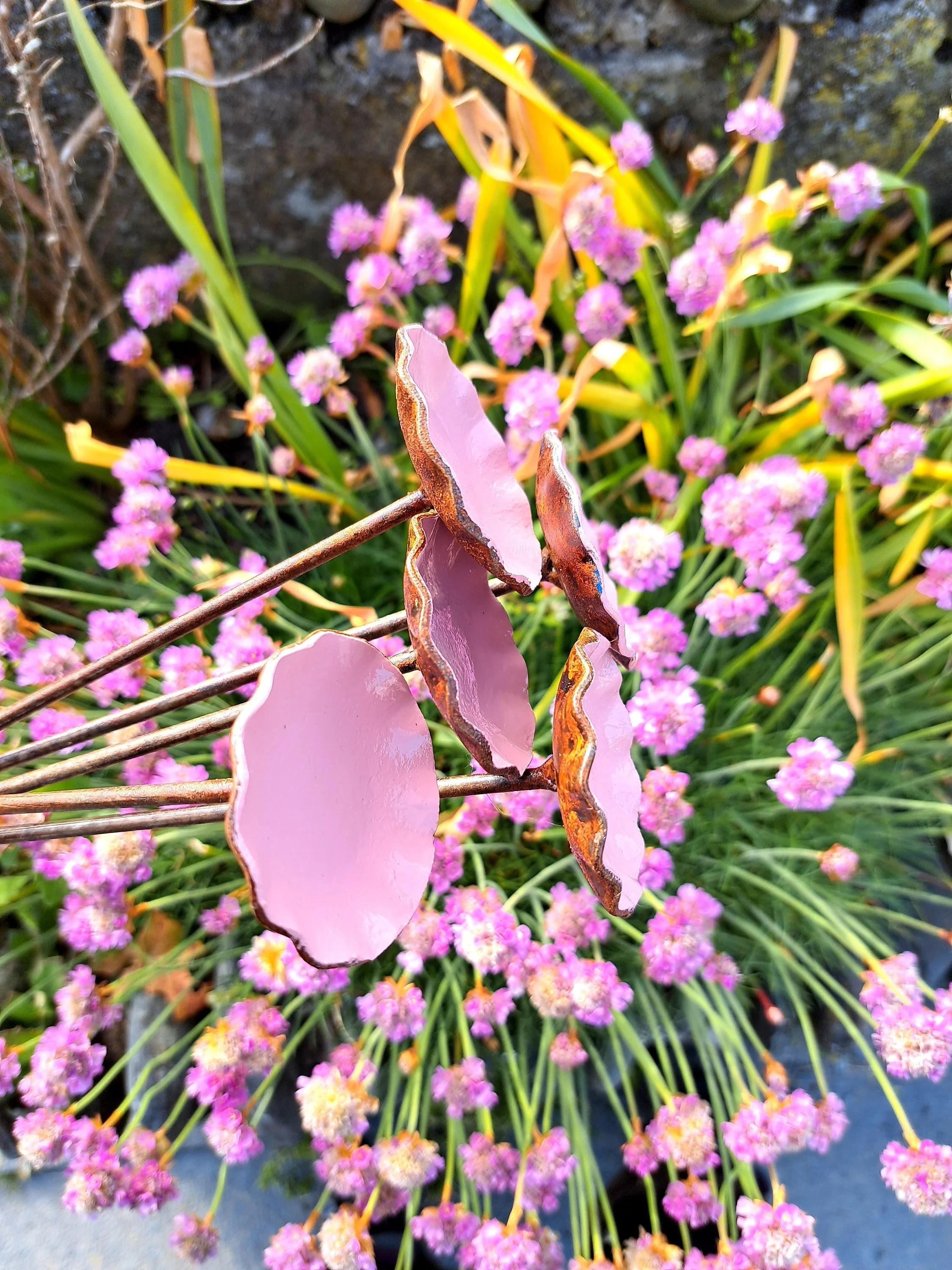
Pink Butterfly Puddlers in a set of three or six
These make the perfect place to put fruit and water for butterflies and bees in your garden, and adding soil to the water helps bees and butterflies gather the minerals and salts they need when the soil is dry.
The butterfly dishes make lovely decorations for flower beds and plant pots, adding height and structure.
The shallow dishes are 7cm in diameter, and each one comes as an individual stem, 47 cm tall. They can be placed together in a cluster, or spread through a flower bed.
They are made of steel with a natural rust patina and hand-painted.
Tessa creates each garden sculpture individually by hand from her workshop in Wales.
The materials used are from the UK and local suppliers where possible.
All packaging is recyclable and uses cardboard and paper only.